
UX + engineering, together
Less copying between tools. More moving things forward.
Your team shouldn’t have to be the integration between its tools. I build automations that connect the work — and prototypes that turn “could this work?” into something you can actually try.
Start with one repetitive task or one product question. No technical specification needed.
With Alexander Fuerst · Würzburg, Germany
02 / What you get
Start with the work. Build what helps.
The useful question is where your team loses time or your idea needs evidence. That determines what to automate, where AI fits and what needs a person’s judgment.
Connect the tools you already use
Move information between systems, remove repeated data entry and make handoffs explicit. Start with one workflow and the access your tools actually provide.
Workflow map · API integrations · error and retry handling
Give AI a defined job
Extract, organize or summarize information where a language model can help. Define review points and test against real examples, so uncertain output has somewhere to go.
AI workflow · evaluation examples · human review points
Put the idea in someone’s hands
Test the riskiest assumption with a working prototype. Give users something to react to and your team a concrete basis for deciding what to build next.
Focused scope · working prototype · findings and next steps
A clear first step
AI workflow assessment
Map one recurring workflow, compare AI and conventional automation, and define a useful first implementation step.
See the scope & deliverablesA focused, paid engagement. Scope and fee agreed before work begins.
03 / Selected work
Built, not just proposed.
AI-supported survey analysis and a personal multi-agent development tool. Concrete examples of turning information and repeated steps into usable software.
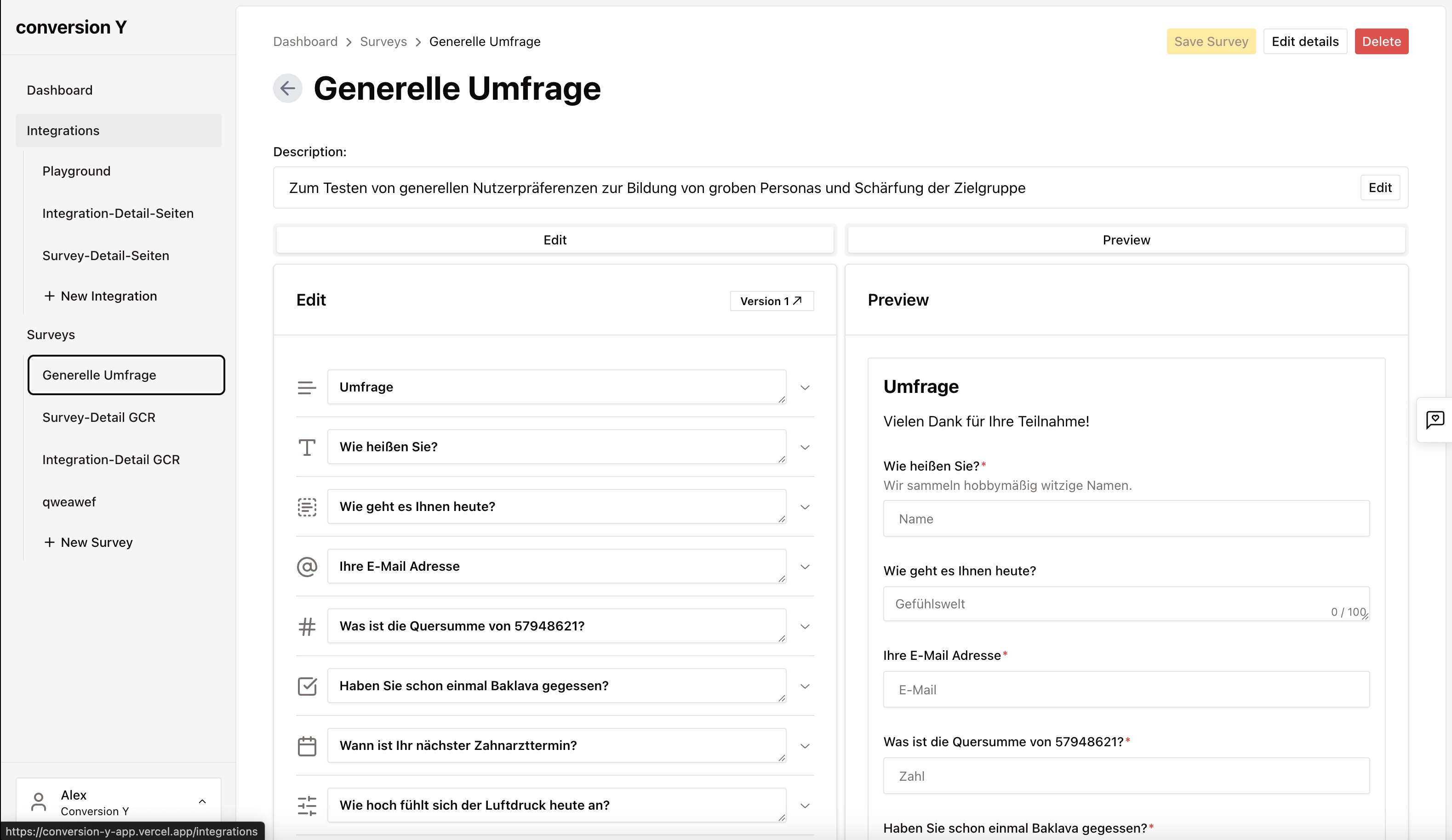
Conversion Y - AI powered Surveys for B2B
A B2B survey product that combines survey creation, website integration and automatic analysis, helping businesses turn responses into actionable information.
- Client / project context
- Conversion Y
Reported project outcomes
Total survey creation and analysis time reduced by >50%
Results reported in this project’s portfolio record. Case-specific outcomes, not a forecast for your project.
- React.js
- Next.js
- Node
- Tailwind
- PostgreSQL
- Zustand
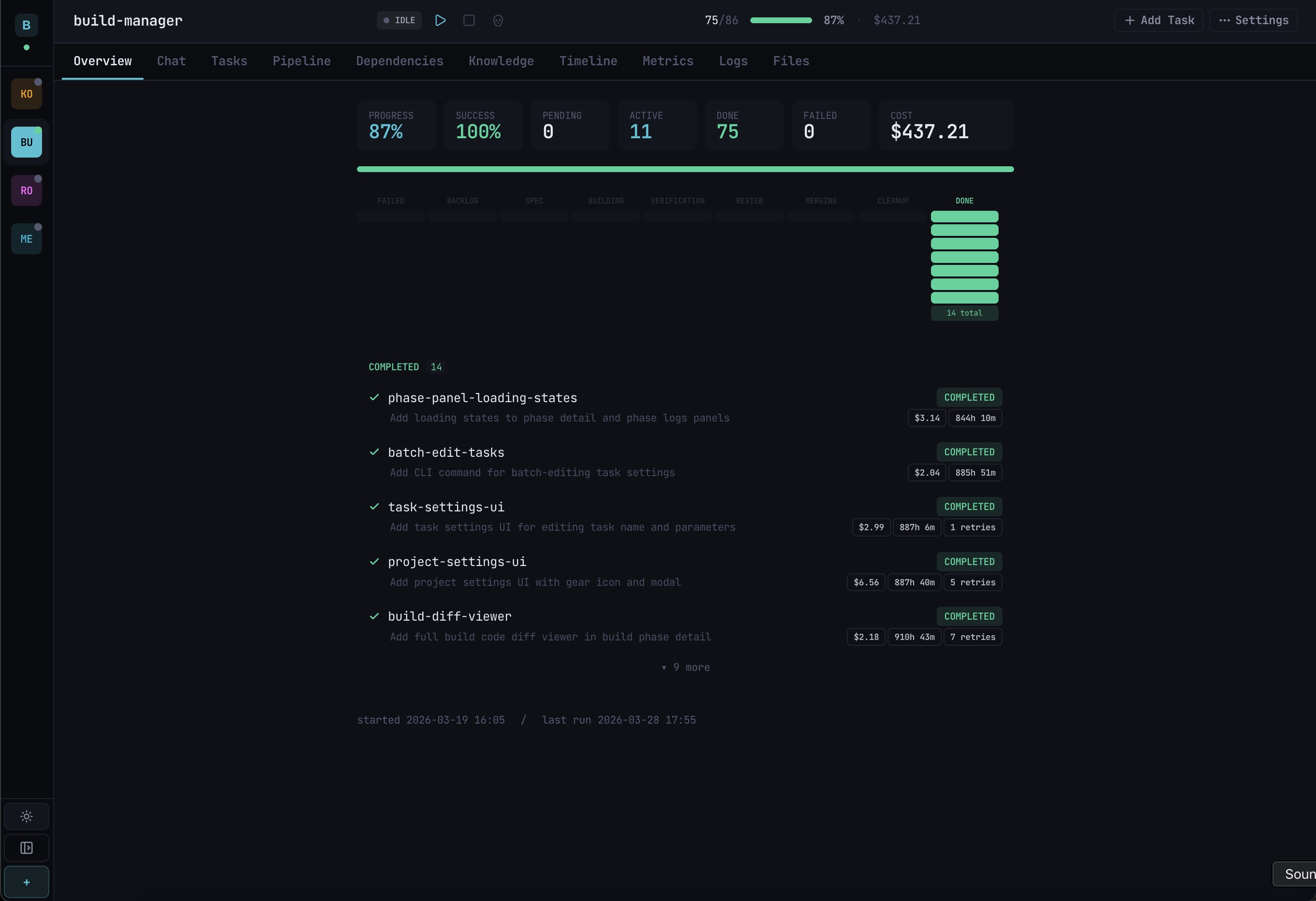
build-manager
A personal development tool coordinating AI agents through a staged build process, with a web interface for live status, steering and review. A self-directed project, not a client commission.
- Client / project context
- Fuerst.one
Reported project outcomes
12 agents running spec generation, code and review simultaneously
Results reported in this project’s portfolio record. Case-specific outcomes, not a forecast for your project.
- React.js
- Node
- Tailwind
- Hono
- SQLite
- Headless Chrome
04 / How we work
From problem to working product
Pick a useful starting point
We trace one workflow or isolate one product question. We look at the inputs, the desired result and the constraints before choosing tools.
Build a small, real version
I connect the critical systems or implement the core interaction. We try real examples and make limits, failure cases and review steps visible.
Decide what deserves to scale
We compare the result with the starting point. If it is useful, we plan monitoring, documentation and the next step. A prototype’s remaining gaps stay explicit.
05 / Practical questions
Before we talk
Does every automation need AI?
No. Rules, APIs and ordinary code are often the clearer solution. I use AI when the task benefits from interpreting language or handling variable input, with checks appropriate to the consequences.
Can you work with our existing tools and sensitive data?
We first check API access, permissions, hosting and what information may leave your systems. That determines the approach. Don’t send confidential data in your first email; we can agree a suitable way to review it.
Will a prototype be ready for production?
A prototype is built to answer a question. Production may also need access controls, monitoring, resilience and a support plan. We’ll make those gaps clear and agree any production work separately.
How do we start, and what will it cost?
Describe one repeated task or the idea you want to test, plus the tools involved. We can define a first milestone and discuss the effort. Scope, access and operational needs determine the cost; there’s no one-size-fits-all package.
06 / Your next step
What are you tired of doing by hand?
Or which idea needs to become real enough to test? Tell me what happens today and what you’d like to happen instead.
Let’s talk about your workflowNo email app? Copy the address into your preferred email service.